Grease Trap Cleaning
A trap only works while there is room in it for grease to separate out. Once it fills, everything runs straight through to the sewer, which is where the line blockages and the notices from the district start.
A trap only works while there is room in it for grease to separate out. Once it fills, everything runs straight through to the sewer, which is where the line blockages and the notices from the district start.
When to call
Root intrusion is relentless here. Mature landscaping and old clay or cast-iron joints are a bad combination that shows up as a backup every few months.
These are the symptoms that usually prompt the call. Any one of them is worth a conversation, and most of them get cheaper to deal with the earlier they are looked at.
A kitchen drain that has slowed down
Odor coming back up through the floor sinks
Grease showing at the outlet side of the trap
An inspection due and no recent service records
A trap on no schedule at all
Once water has been somewhere it should not be for a while, you are paying for drying and repair as well as plumbing.
Testing equipment earns its keep by ruling things out, which is how you avoid paying for repairs you never needed.
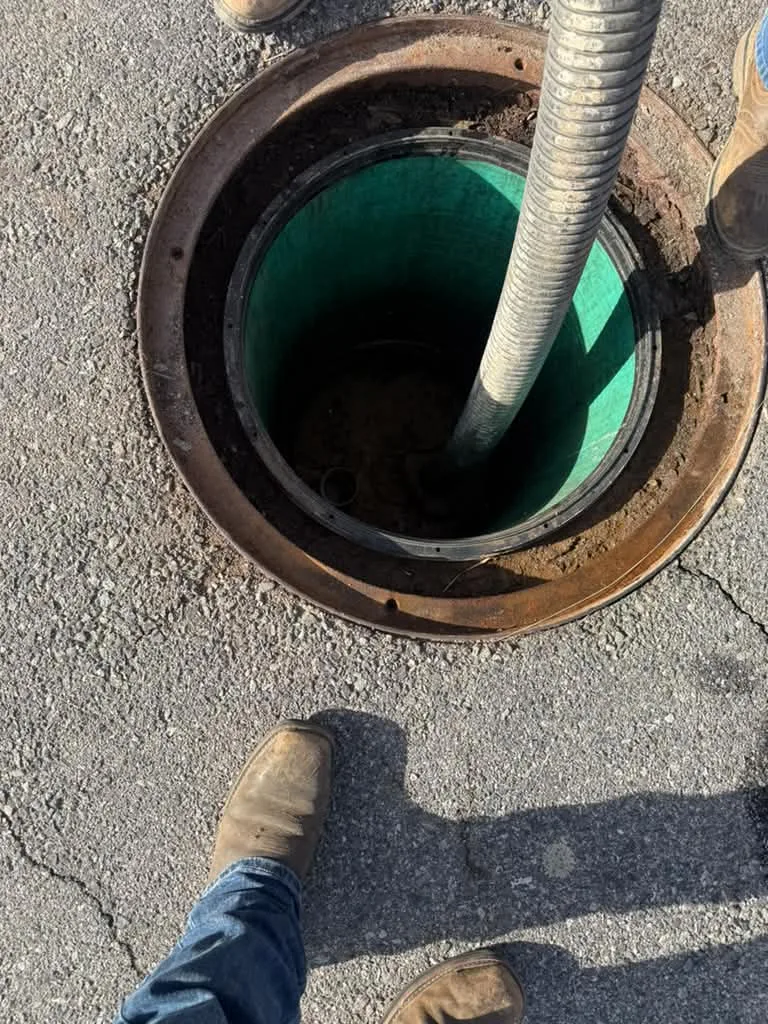
Pump the trap out completely
The whole contents, not a skim off the top. Skimming the surface and leaving the settled solids is the most common shortcut in this trade.
Scrape the walls and the baffles
Grease sets hard on every surface in there. What is stuck to the walls is capacity you have paid for and are not getting.
Check the baffles and the tees
Missing or broken baffles let grease straight through no matter how clean the trap is.
Look at the inlet and outlet lines
A trap can be spotless and the line beyond it still coated. That is what causes the backup you actually notice.
Leave the paperwork
Date, volume and disposal, in a form that satisfies an inspector.
You will know the cost before the work starts. Surprises on an invoice are how contractors lose customers permanently.
There is a shortcut in this trade worth knowing about, because you are paying for it when it happens. A trap can be serviced by skimming the floating grease off the top and pumping the liquid, leaving the settled solids on the bottom and the hardened grease on the walls and baffles. The invoice looks the same. The trap is a fraction of its rated capacity and fills again in weeks. A full clean means the whole contents out and the surfaces scraped, and you can tell which one you got by how long it lasts.
Pressure testing, acoustic listening and thermal imaging all get used regularly here, because slab construction makes hidden leaks a routine part of the work.
The service footprint reflects where our customers are rather than a radius drawn on a map. If you are outside the usual radius, call and ask. We cover more ground than most shops our size.
Testing equipment earns its keep by ruling things out, which is how you avoid paying for repairs you never needed.
Once water has been somewhere it should not be for a while, you are paying for drying and repair as well as plumbing.
Knowing your own system is worth real money. Where the main shutoff is, where the sewer cleanout is, how old the water heater is, and whether the property is on sewer or septic. Those four facts shorten every future service call you will ever have.
Wipes should not go down any drain, whether the packet says flushable or not. They do not break down, and they are behind a large share of the main line blockages we clear.
Know the age of the major components. Water heaters, supply piping and sewer laterals all have expected lifespans, and planning for a replacement is considerably cheaper than reacting to one.
For commercial property, a maintenance schedule on drains and interceptors costs a fraction of emergency response, and it is the difference between planned work and a closure.
When you call we will ask a few questions that help us bring the right equipment, which is usually the difference between one visit and two.
A lot of our work comes from customers we have had for decades, and from the people they send us. That is essentially the whole marketing strategy and it has held up for forty-four years.
The licensing matters most on jobs that span disciplines, like a sewer lateral replacement that is part plumbing and part excavation.
No sales pitch, and a straight explanation of what we found.
Big Mike's · Yucaipa, California
If yours is not here, call and ask. We would rather talk it through than have you guess.
The common rule is when grease and solids reach a quarter of the depth, which for most kitchens is every one to three months. Volume of fryer and wash-down work drives it.
Pumping removes the contents. Cleaning also scrapes the walls and baffles where hardened grease is taking up capacity. We do both, because only doing the first is how traps stay half full.
Yes. Health and sewer district inspections ask for them, and having a clean run of service dates is the easiest inspection you will ever have.
No. They move grease further down the line rather than removing it, and some districts specifically prohibit them.
Most kitchens want this done before open or after close, and that is normal for us. Tell us the window and we will work to it.
Call and ask and we will tell you straight. You will know the cost before the work starts either way.
Since 1982. Big Mike founded the company and handed it to his family, who run it now. That is forty-four years in the same valley under the same name.
Regularly. We coordinate around construction schedules, tenant access and operating hours as a matter of course.
Know where your main water shutoff is and whether it turns. Clear access to the work area. If you smell gas, leave the building and call from outside.
Septic systems are far more sensitive to what goes into them than sewer connections are. A municipal system dilutes and treats at scale. A septic tank is a small ecosystem where wipes, grease, harsh chemicals and excessive water all cause real damage. The habits of the household matter more to septic longevity than the age of the equipment does.
For commercial properties, tell us about access requirements and operating hours when you call so we can schedule around them properly.
The reach across San Bernardino, Riverside and eastern Los Angeles counties is a consequence of longevity rather than a marketing decision. Customers move, recommend us to people in other towns, and the map fills in over four decades.
The whole system from the tank to the field.
Sewage, effluent and sump pumps.
New and replacement drain fields.
Trenching and digging for underground work.
Baffles, lids, risers and cracked tanks.
Failing and saturated drain fields.
We run grease trap cleaning out of Yucaipa across Chino, Glendora, Victorville, Walnut, Banning, Lake Elsinore and Eastvale, and the rest of San Bernardino, Riverside and the eastern edge of Los Angeles County.
Tell us what it is doing and we will tell you what it takes to fix it. Plain language, no sales pitch, and the number before we start.
Yucaipa, California · Serving San Bernardino, Riverside and eastern Los Angeles counties · Open 24 hours