Finding the break under a San Bernardino lot and closing it back up
A commercial water line almost always breaks out of sight, under asphalt, concrete or a landscaped bed, and the first sign tends to be a bill, a puddle that never dries or a building where nothing has decent pressure. We locate the break, keep as much of the property in water as we can, fix the section, test it and put the surface back so people can park on it.
How a buried break gives itself away
Water under pressure finds the easiest way up. Where that turns out to be depends on what is sitting on top of the pipe.
Homes and everything else we do in town are covered on the San Bernardino service area page.
Water seeping up through cracks in the asphalt, or a dark wet patch on the lot that is still there on a dry afternoon with no sprinklers running.
A planter bed that stays soggy days after the irrigation was shut off, or shrubs along one edge that suddenly look greener than everything around them.
A water bill that jumps when nothing about how the building is used has changed. A meter that keeps turning with every fixture closed is the same message, read straight off the dial.
Weak pressure across the whole building at once. One slow restroom points at a fixture. Every sink, toilet and hose bib going soft together points at the line coming in.
Any one of those can have another explanation. Irrigation pipe breaks too, and a weak faucet is sometimes nothing worse than a clogged aerator. We rule those out first, because tearing up a parking lot to chase a sprinkler leak is a bad day for everybody and an expensive one for you.
Keeping the property in water while the break gets found
On a commercial property the water being off is often worse than the leak itself. A restaurant cannot open without it, and an apartment building full of people needs it before work in the morning. So isolating the break comes ahead of everything else.
If the property has working valves on its branches, we close only the one feeding the bad section and the rest of the buildings keep their water. When the valves are old and seized, or there is a single main shutoff for the whole lot, we tell you that right away and plan the shutdown for the least painful hour we can find. Before we leave, every valve we closed is opened back up and the water is checked at the far end of the property.
Then comes narrowing down where the water is actually leaving the pipe. Water can travel a long way along a trench before it reaches the surface, so the wet spot is a clue and not a dig site. Pressure testing and acoustic listening help us pin the break down before any saw touches the pavement.
The general picture of this work, across the whole area we cover, is on our commercial water line repair page.
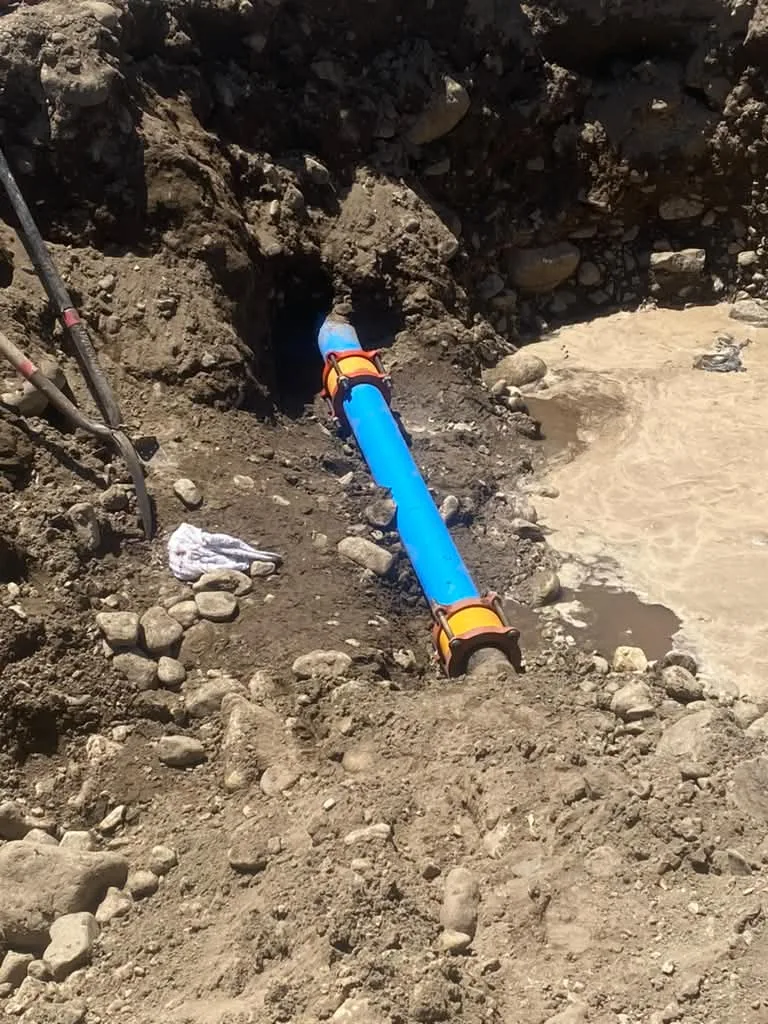
If the pipe on either side of the break looks worn once it is exposed, we show you before deciding how far back to cut.
Cut what the repair needs, then give the lot back
We cut the asphalt or concrete only as wide as the repair calls for. A bigger hole means more saw time, more patching and more of your parking blocked off, and it does not make the fix any better.
With the break exposed, the damaged length of pipe comes out and a new piece goes in with proper fittings at each end. Before the hole gets filled, the line goes back under pressure and we watch the joints for a while. The trench is then filled a few inches at a time and tamped, so the patch over it stays level instead of settling into a bowl.
Last comes the surface, so customers and tenants can park on it again, and the cones leave with us. Your lot stays in use around us while the hole is open, so the work area is coned off and kept tidy the whole time.
Other jobs where we had to open a lot or a walk to reach a pipe are in the gallery.
When the same line keeps breaking
One break on a line that has held up for years is a repair. A second break a few feet from the first, and then a third, means the trouble is the whole run and not one bad spot.
Old pipe tends to wear along its entire length, and every repair is another cut in the lot, another patch and another morning with somebody’s water off. At some point the honest advice is to stop patching and replace the run, and we will say so when you get there. We will say so just as plainly when you are not there yet, because a single repair on otherwise sound pipe is the smaller bill.
Whichever side of that line you are on, a person answers the phone at any hour. If water is turning up somewhere it should not, describe it on our contact page or call, and we will come find the break. The quote costs you nothing, and you get it after we have seen the problem.
One break on a line that has held up for years is a repair.
More we handle in San Bernardino
- Commercial Water Line Installation
New lines to buildings.
- Commercial Sewer Repair
Broken laterals at businesses.
- Commercial Drain Cleaning
Kitchens, restrooms, floor drains.
- Excavation
Digging to reach buried lines.
Everything else we cover in town is on the San Bernardino page, and the commercial water line repair page covers this work wherever you are in the valley.
What property managers ask about a broken line
Water coming up through the asphalt? Call the shop first.
How do we know it is the water line and not the irrigation?
Shut the irrigation off and look at the water meter with every fixture in the building closed. If the meter still moves, something on the pressurized side is leaking. We confirm it on site, because a broken sprinkler line and a broken building line can look alike from the surface.
Will the whole property lose water during the repair?
Not if the valves cooperate. Where we can, we close only the branch that feeds the broken section. If the shutoffs are seized or there is just one main valve, the shutdown is kept short and scheduled for the hour that costs your business the least.
How much of the parking lot has to be cut?
Only what the repair needs. We size the opening to reach the break and make a sound fix, and no wider than that. Less cutting means less of your lot blocked off while we work and a smaller patch to put back at the end.
Do you put the asphalt back afterward?
Yes. The trench is filled and compacted in stages so it holds up, and then the surface is restored so cars can park over it again. We do not leave a gravel hole surrounded by cones for somebody else to come back and finish.
Should we repair the line or replace it?
It depends on the line's history. A first break on pipe that has held up for years is usually a repair. Several breaks along the same run mean the pipe is wearing out, and replacing it is less trouble than reopening the lot every few months.
Can you come at night if water is coming up through the lot?
Yes. The phone is answered around the clock by a person, and after-hours calls are ordinary work for us. While you are on the call we will help you find the valve to close, if there is one, so the water slows down until we arrive.
Water showing up somewhere it should not?
Call the shop and tell us where the water is coming up, how long it has been there and whether the building has lost pressure. We will help you find a valve to close, then come locate the break and lay out the repair.